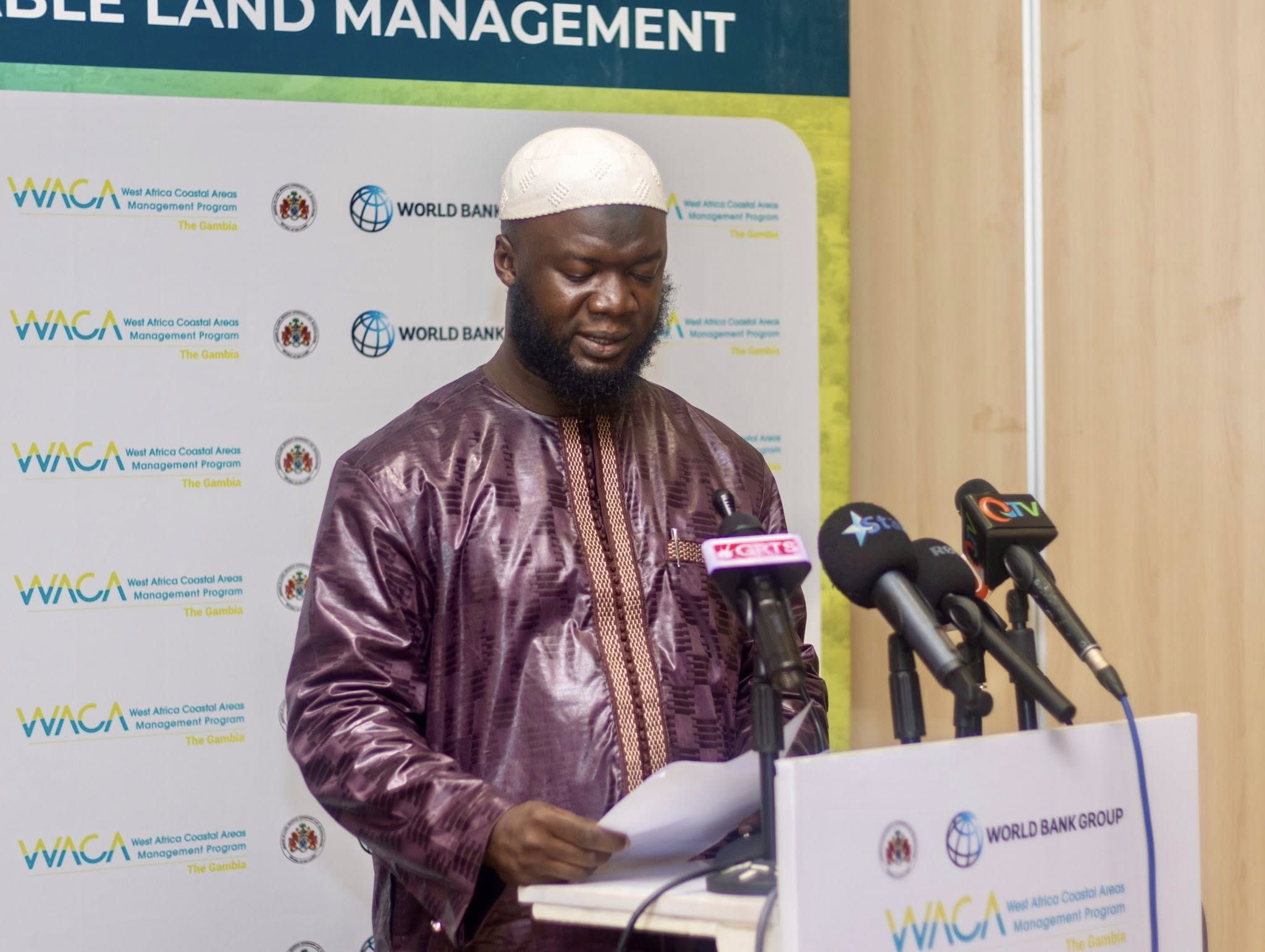
Message from The Coordinator
The West Africa Coastal Areas Resilience Investment Project 2 (WACA ResIP 2) – The Gambia is an ambitious initiative designed to address one of our country’s most urgent climate resilience challenges: the restoration and reprofiling of the Kotu Stream. Funded by the World Bank, the project adopts an integrated, technically robust approach to flood risk management, environmental restoration, institutional strengthening, and livelihood support.
At the core of our technical work is a hybrid infrastructure model that blends grey (engineered) solutions — such as upgraded drainage systems, bridges, and streambank protection — with green (nature-based) interventions, including mangrove restoration and sponge city designs. These combined measures will improve stormwater management, reduce pluvial and fluvial flooding, and safeguard critical ecosystems along the 11.2 km Kotu Stream corridor, home to over 200,000 people. Advanced hydrometric equipment, including automatic rain gauges and water level recorders, have been installed to enhance flood monitoring and early warning systems.
Beyond physical infrastructure, WACA places strong emphasis on institutional capacity. We are working with key technical agencies — the National Environment Agency (NEA), National Disaster Management Agency (NDMA), Department of Water Resources (DWR), National Roads Authority (NRA), Ministry of Lands, and municipal councils — to build their operational and regulatory readiness. This includes policy development in key areas such as climate change, land use, and disaster risk management, alongside targeted training and capacity-building programs.
Equally important is the social dimension of the project. Through a comprehensive market assessment and community engagement strategy, we are identifying livelihood interventions that respond directly to the needs of the most affected populations. Priority is given to initiatives that empower women and youth and foster environmentally sustainable small-scale businesses such as urban farming, recycling, and horticulture. These efforts are supported by robust environmental and social safeguards to ensure inclusivity, transparency, and protection of vulnerable groups.
As Project Coordinator, I am proud to work alongside our partners, including local communities, to deliver solutions that are not only technically sound but also grounded in the lived realities of the people we serve. The WACA Project is not just about infrastructure — it is about building the resilience of communities and helping them to live a safe, healthy and dignified life.
Dr. Muhammed Lamin Sanyang
Project Coordinator
WACA ResIP II – The Gambia