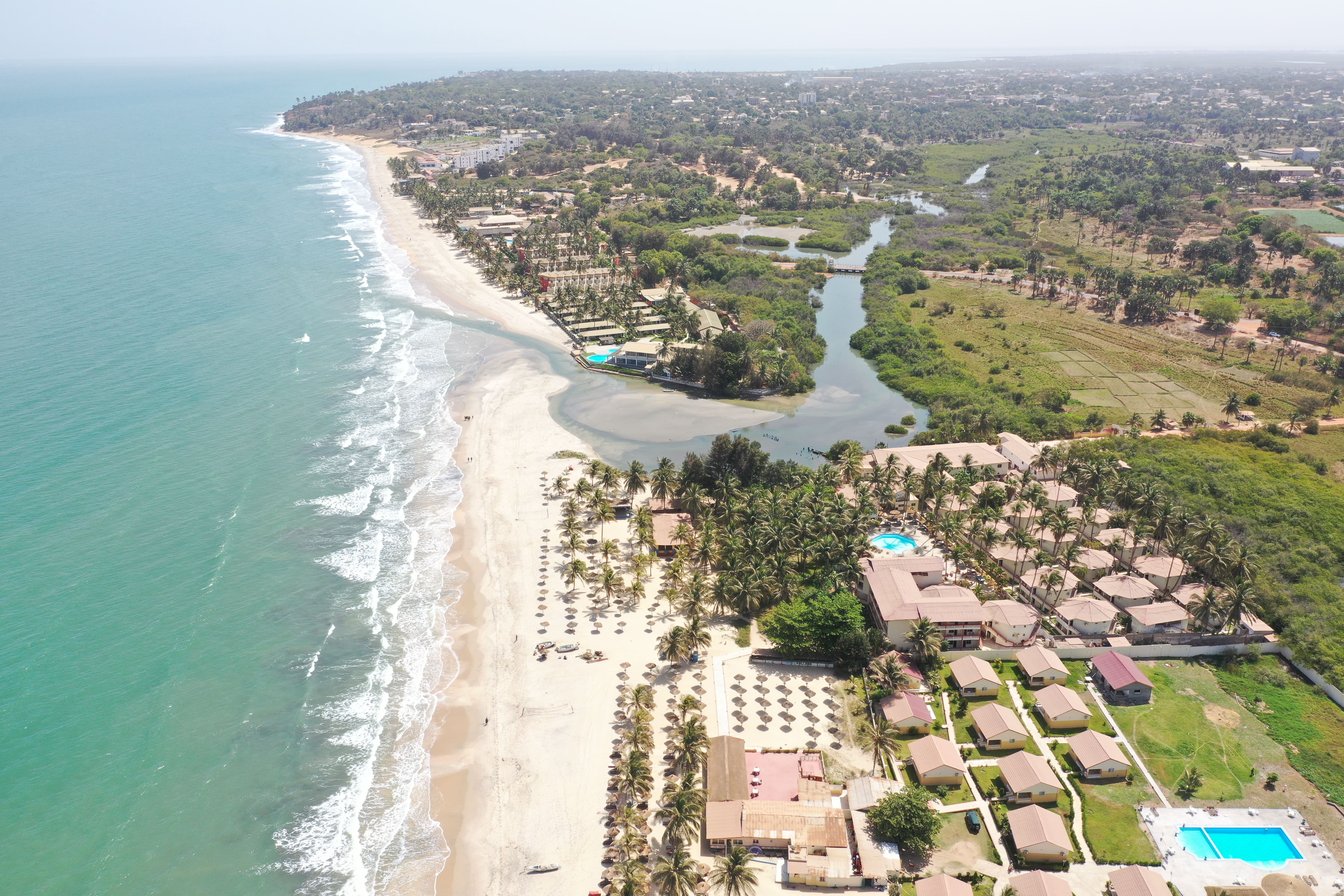
The second phase of the WACA Project, the West Africa Coastal Areas Resilience Investment Project 2 (WACA ResIP 2), was launched in The Gambia, in 2023, to enhance the resilience of targeted communities. The project’s principal focus is the restoration and reprofiling of the 11.2 km Kotu Stream to prevent flooding and pollution, ultimately protecting lives and properties.
The project will propose hybrid solutions, combining nature-based solutions (NbS) and engineering approaches, to strengthen resilience against flood risks. It will enhance the stream's attractiveness and accessibility, improve urban livability, and protect public health. Additionally, the project will support sustainable development along the stream through urban farming initiatives and commercially viable, small-scale businesses.
The project will also improve institutional and policy frameworks around disaster risk management, integrated coastal development, natural resource management, and urban resilience. It also will contribute to effective public service delivery by strengthening the institutional capacities of relevant technical government institutions and developing robust national legislation and policies.
The Ministry of Environment, Climate Change and Natural Resources (MECCNAR) is the executing agency and oversees the project through a Project Implementation Unit (PIU) under its Central Projects Coordination Unit (CPCU). The PIU is tasked with managing the project implementation.
To ensure accountability, inclusivity, and technical alignment, the PIU has also established:
- A National Project Steering Committee (NPSC), headed by MECCNAR and composed of senior representatives from other ministries, government agencies, civil society, and local authorities, to provide oversight of project activities.
- A National Technical Committee (NTC), consisting of representatives of the project implementing partners and others in the coastal management sector, to facilitate smooth technical coordination.
The Project Development Objective (PDO) is to strengthen the resilience of targeted communities and areas in coastal Western Africa.
Specifically, the project is expected to:
- Strengthen the resilience to flood risks.
- Improve the attractiveness and accessibility of the riverfront for recreational purposes and biodiversity.
- Enhance the socio-economic development of the area.
- Improve livability and urban environment.
- Reduce pollution from uncontrolled stormwater runoff.
- Improve public health conditions.
- Improve accessibility/connectivity avoiding traffic disruption.
The project is organized into four (4) key components:
(I) Strengthening Regional Integration – This component aims to enhance the coordination of coastal resilience efforts at both regional and national levels. It focuses on consolidating regional institutional frameworks, harmonizing policies, achieving economies of scale, and fostering new strategic partnerships to scale up responses to coastal resilience challenges.
(II) Strengthening the Policy and Institutional Framework – This component supports the strengthening of institutional and policy frameworks related to coastal development, protection, and natural resource management. It funds the development of national legislations and policies, including a Climate Change Act, National Land Policy, Disaster Risk Management Policy etc., and capacity needs assessment and development for the project implementing partners.
(III) Strengthening Physical and Social Investments – This component finances targeted interventions to address flooding and pollution along the Kotu Stream. It includes a combination of:
- Grey infrastructure solutions: such as constructing primary and secondary drainage systems, widening Kotu Stream banks, and building bridges across different areas of the stream.
- Green or nature-based solutions: such as mangrove protection to act as a buffer against inundation and protect the integrity of the physical investments on the stream.
- Hybrid solutions: combining grey and green approaches for comprehensive risk mitigation.
These efforts will be supported by feasibility studies, design work, and initiatives for social development and economic recovery tailored to the needs of affected communities.
(IV) Project Management – This component provides funding for the Project Implementation Unit to cover staffing, monitoring and evaluation, technical audits, safeguards, financial management, procurement, communication and engagement, and training. It ensures that the project is managed efficiently and aligns with established objectives.
The primary target area of intervention for WACA in The Gambia is the Kotu Stream. The Stream spans 1,881 hectares and stretches 11.2 km from the settlement of Nema Kunku in the West Coast Region to Kotu on the Atlantic Coast, passing through 11 settlements/communities, with an approximate population of 201,044 people (2020).
The Kotu Stream area is particularly prone to pluvial flooding, which affects residents as well as critical public infrastructure, including schools, markets, and water supply facilities in the upstream section. In the estuary area, fluvial flooding and erosion have impacted tourism facilities and other investments along the coast.
The project is being implemented by MECCNAR through the PIU under its CPCU. The following are the key implementing partners:
- National Disaster Management Agency (NDMA).
- National Environment Agency (NEA).
- Department of Water Resources (DWR).
- National Roads Authority (NRA).
- Kanifing Municipal Council (KMC).
- Brikama Area Council (BAC).
- Ministry of Local Government, Lands and Religious Affairs (MoLGLRA).
- TANGO (Civil society organizations).
The project will deliver significant benefits to a wide range of stakeholders, addressing the needs of vulnerable communities, government agencies, businesses, and local councils. The key beneficiaries include:
- Communities in the Kotu Stream Catchment Area: These include women, youth, and other residents who face regular flooding and pollution, resulting in the loss of life and destruction of property.
- Technical Government Agencies: Institutions such as the National Disaster Management Agency, Department of Water Resources, National Environment Agency, and National Roads Authority will benefit from capacity-strengthening programs to enhance their responses to climate change and disaster risk reduction. Other key beneficiaries include the Ministry of Lands, Regional Government and Religious Affairs and Ministry of Transport, Works, and Infrastructure.
- Local Community Members: Selected beneficiaries of social projects aimed at livelihood improvement and building resilience to climate change.
- Tourism Sector: Hotels along the coastal area, such as Sunset Beach Hotel, which are affected by fluvial erosion and pollution, will benefit from an improved drainage system and waste management.
- Vulnerable Groups: Schoolchildren and patients will have better access to schools and health centers through enhanced connectivity and transportation, especially during the rainy season.
- Small Traders and Businesses: Women vendors, mechanics, carpenters, and other small business owners, who frequently suffer losses due to annual flooding, will experience reduced disruptions and improved business continuity.
- Local Municipal Councils: The Kanifing Municipal Council (KMC) and Brikama Area Council (BAC) will benefit from capacity-strengthening programs, improved waste management systems and reduced expenditures on disaster relief in their communities.