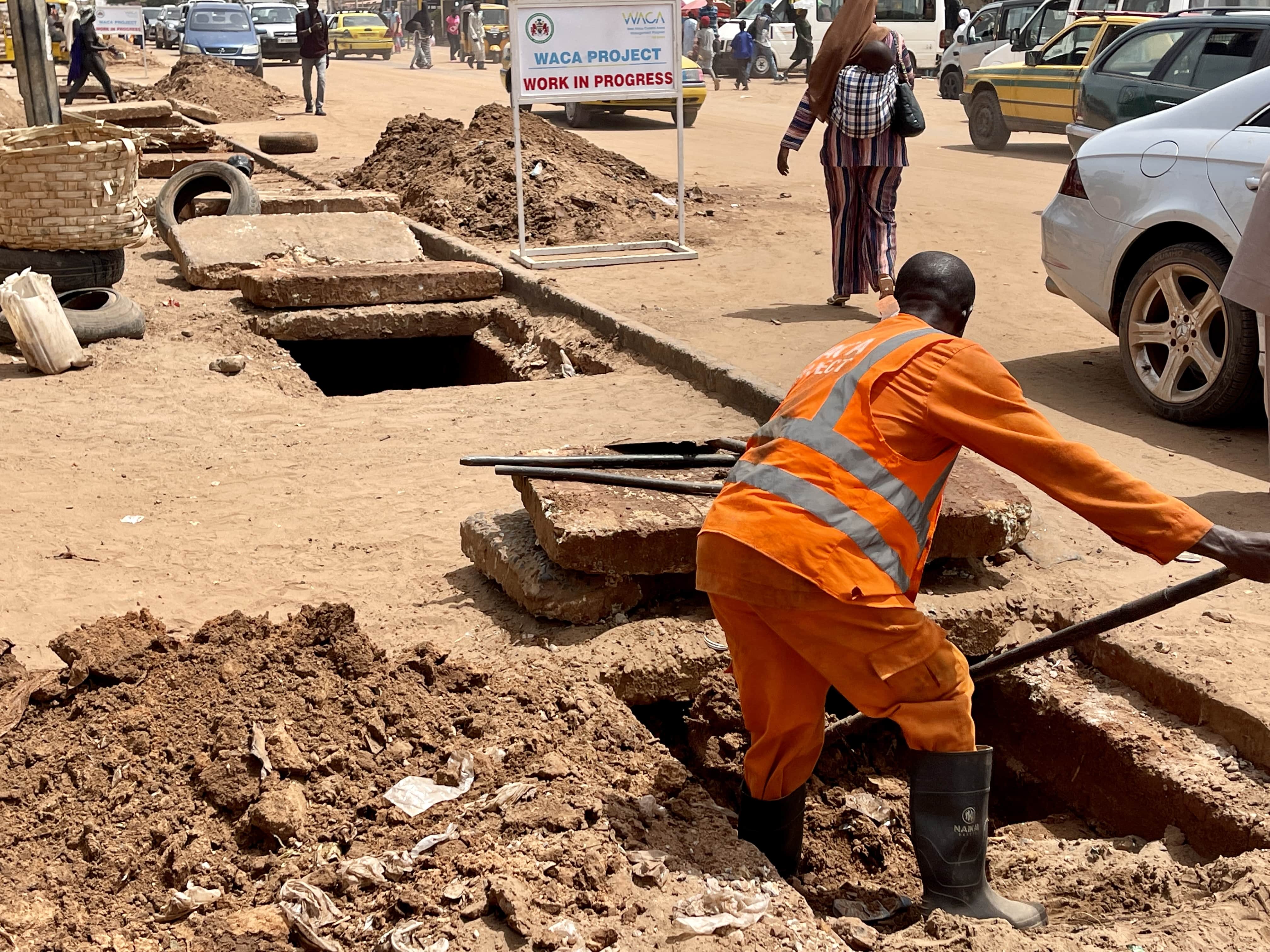
WACA seeks to restore and reprofile the Kotu Stream to prevent flooding and pollution, ultimately protecting lives and properties. The project will propose hybrid solutions, combining nature-based solutions (NbS) and engineered approaches, to strengthen resilience against flood risks. It will enhance the stream's attractiveness and accessibility, improve urban livability, and protect public health. Additionally, the project will support sustainable development along the stream through urban farming initiatives and commercially viable, small-scale businesses. WACA will also strengthen national policies and institutions by building their capacity to deliver quality services.
The WACA Project in The Gambia focuses on critical infrastructure investments to restore and reprofile the Kotu Stream to reduce flood risks, pollution, and improve public health. Our infrastructure activities combine grey solutions (engineered structures) and green solutions (nature-based defenses) to deliver comprehensive protection.
Key infrastructure interventions include:
- Widening and reprofiling the Kotu Stream to improve water flow and mitigate flooding.
- Constructing primary and secondary drainage systems to prevent stormwater accumulation and manage runoff safely.
- Building bridges and improving connectivity across different parts of the Stream for easier, safer access.
- Restoring mangroves and wetlands at the downstream to act as natural buffers against flooding and erosion.
- Installing hydrometric equipment (rain gauges and water level recorders) to enable real-time flood monitoring and early warning systems.
At the heart of the WACA Project are the communities it serves. Through targeted social development interventions, informed by a market assessment study, WACA aims to empower people, invest in the livelihood development of communities, and promote resilience, especially among women, youth, and vulnerable groups.
Our social initiatives include:
- Livelihood improvement programs such as urban farming, horticulture, and small-scale sustainable businesses, particularly for women and youth.
- Waste recycling initiatives to create green jobs and reduce pollution along the Stream.
- Community sensitization campaigns on flood preparedness, climate change, waste management, and pollution prevention.
- Supporting female-led enterprises for greater economic empowerment.
- Strengthening gender-based violence (GBV) protections with survivor-centered grievance mechanisms and comprehensive support services.
Building strong institutions is critical to the sustainability of WACA’s interventions. The project supports institutional strengthening at national and local levels to ensure that The Gambia can effectively manage coastal and flood risks far beyond the project’s duration.
Key actions include:
- Developing and updating national policies and legislation, such as a Climate Change Act, National Land Policy, and Disaster Risk Management Policy.
- Training and capacity-building programs for technical government agencies like the National Disaster Management Agency (NDMA), National Environment Agency (NEA), Department of Water Resources (DWR), and National Roads Authority (NRA).
- Strengthening the operational capacities of municipal councils — the Kanifing Municipal Council (KMC) and Brikama Area Council (BAC) — for better waste management, urban planning, and climate resilience.
- Enhancing disaster preparedness and response frameworks, including improved early warning systems and risk management services.