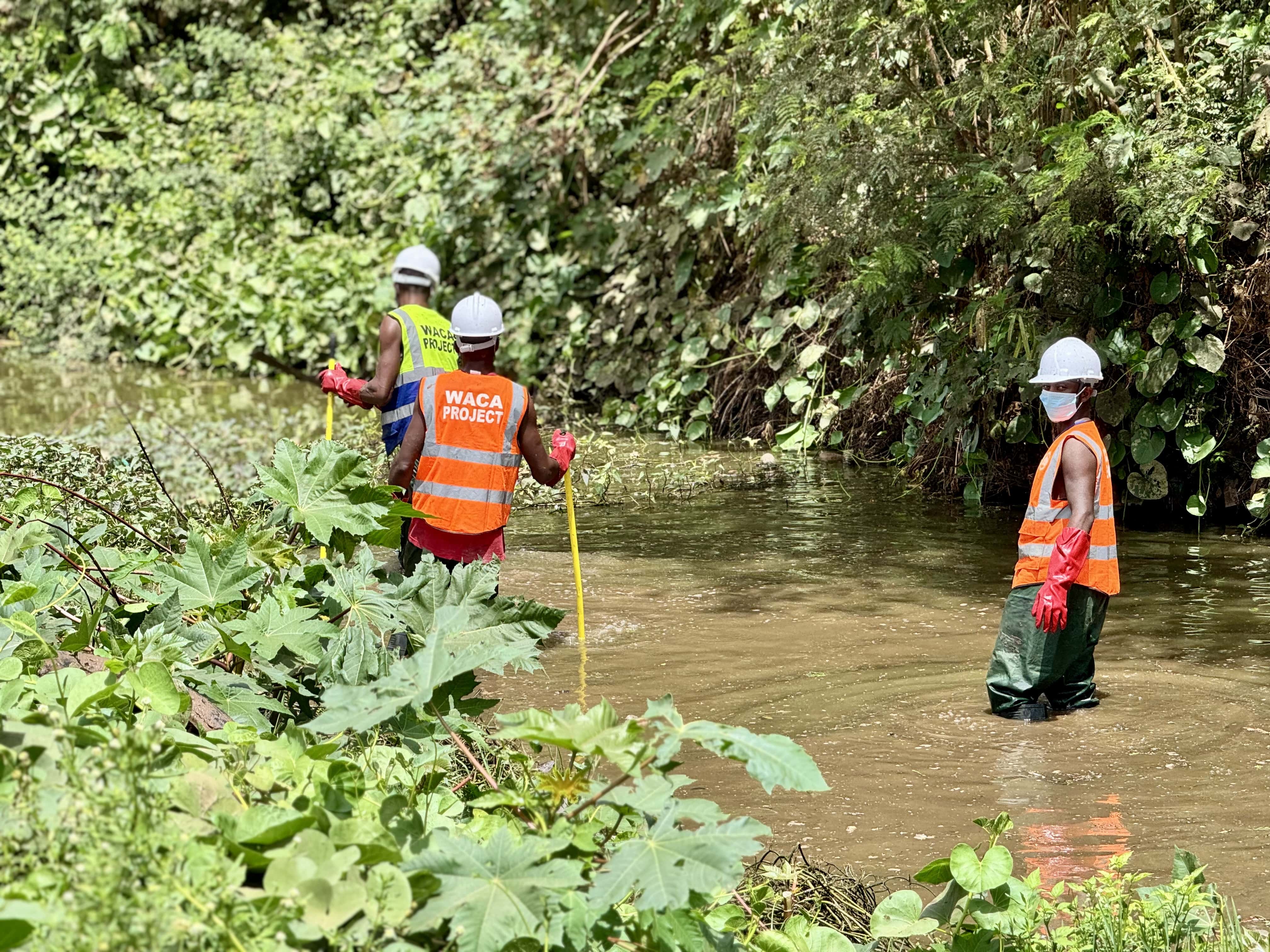
The Kotu Stream is a major flood hotspot in the Greater Banjul Area and is inhabited by relatively low-income communities with a high flood vulnerability. It is the primary target area of intervention in The Gambia is the Kotu Stream. The Stream spans 1,881 hectares and stretches 11.2 km from the settlement of Nema Kunku in the West Coast Region to Kotu on the Atlantic Coast, passing through 11 settlements/communities, including Nema Kunku, Latrikunda Sabiji (Jola Kunda), Bundung (Borehole), Sukuta, Serrekunda (London Corner), Bakoteh, Dippa Kunda, Manjai, Latrikunda Yiringanya, Latrikunda Erinjang with its exit at Kotu between Sunset and Palm Beach Hotels on the Atlantic Coast. As of 2020, approximately 201,044 people were living along the stream.
In 2020, the Government of The Gambia, with support from the World Bank, commissioned a study titled Flood and Coastal Risk Assessment and Priority Investment Planning for Greater Banjul. The report identified five major flood hotspots in the Greater Banjul Area. Following this, a national stakeholder workshop, convened virtually by the World Bank from May 4 to 5, 2021, selected the Kotu Stream as the priority intervention area for the WACA Project, partly due to the high flood vulnerability and population density in the area and Stream’s connection to the Atlantic Ocean.
The Kotu Stream area is particularly prone to pluvial flooding, which affects residents as well as critical public infrastructure, including schools, markets, and water supply facilities in the upstream section. In the estuary area, fluvial flooding and erosion have impacted tourism facilities and other investments along the coast.
At the heart of the WACA Project is a bold and transformative vision for the Kotu Stream — to restore it as a vibrant, safe, and sustainable urban waterway that improves the lives of surrounding communities and strengthens The Gambia’s resilience to climate change.
We envision the Kotu Stream as a thriving corridor where flood risks are drastically reduced, clean water flows freely, and natural ecosystems like mangroves flourish to protect biodiversity and combat erosion. The transformation will introduce green spaces, urban parks, and sports facilities to provide residents with safe areas for recreation, physical activity, and community gatherings.
The Stream area will also feature innovative sponge city designs, using permeable surfaces and green infrastructure to absorb rainwater naturally, reduce runoff, and enhance urban resilience.
Through this integrated approach — combining nature-based solutions, sustainable livelihoods, urban renewal, and institutional reforms — the WACA Project aims to make the Kotu Stream a symbol of resilience, environmental sustainability, and opportunity for future generations.