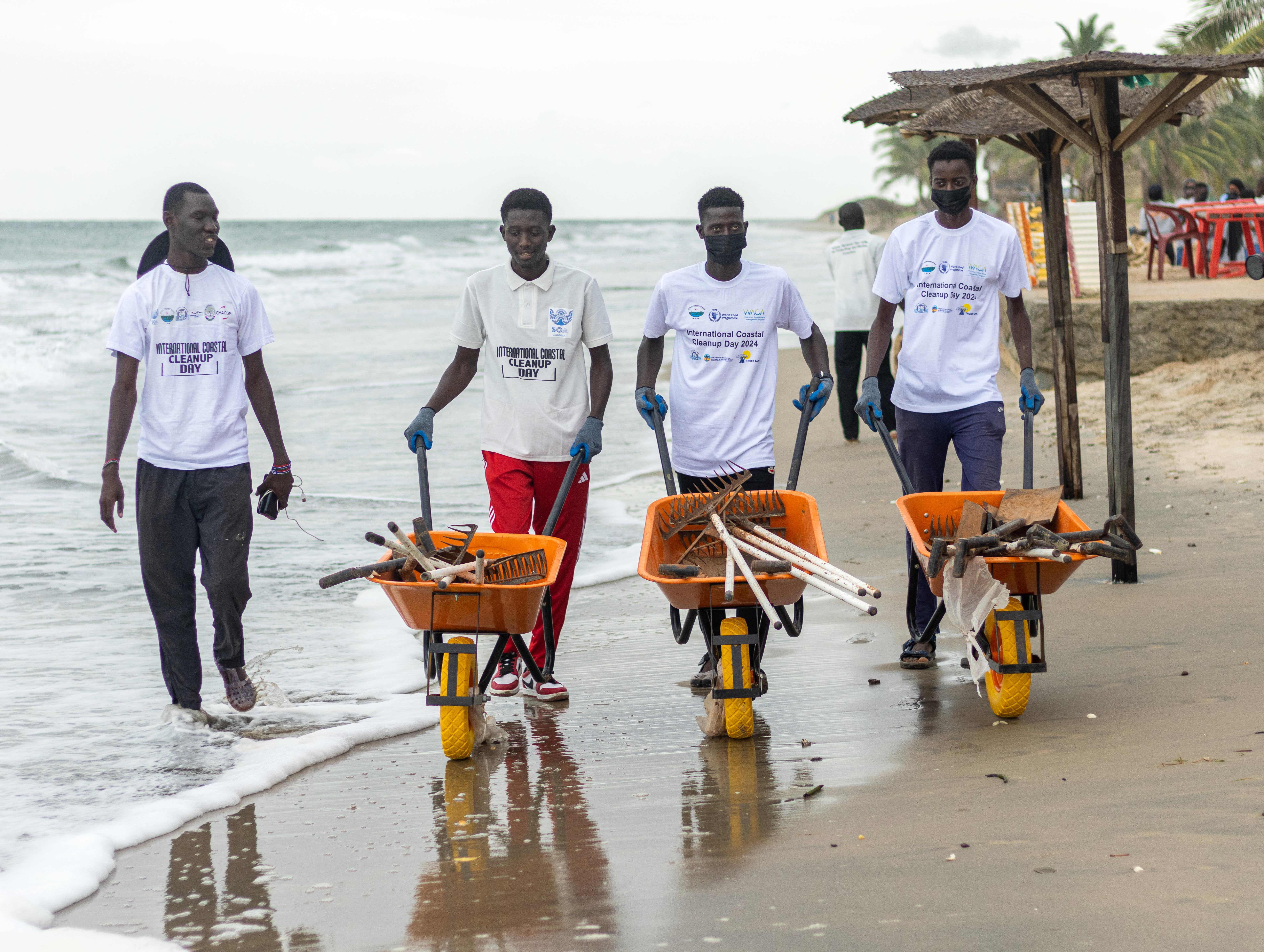
The WACA Project is deeply committed to protecting people and ecosystems throughout its activities. Environmental and social safeguards are integrated into every stage of the project to ensure that interventions are inclusive, sustainable, and minimize harm. The project adheres to the World Bank’s Environmental and Social Framework (ESF) and national regulations, with strong environmental compliance, disaster risk reduction, and climate resilience measures.
Aligned with the World Bank’s Environmental and Social Framework and national laws, the project promotes sustainability, climate resilience, and disaster risk reduction while maintaining strong environmental compliance. It includes robust grievance redress mechanisms, with dedicated protocols for addressing Sexual Exploitation, Abuse, and Harassment (SEA/SH). Socially, WACA emphasizes gender-responsive planning, the empowerment of women and vulnerable groups, and inclusive participation through tools like the Stakeholder Engagement Plan and Communication and Visibility Plan. This integrated approach ensures both environmental sustainability and the well-being of communities, laying the groundwork for lasting resilience in The Gambia. It also includes proactive grievance redress systems, including special protocols for handling complaints related to Sexual Exploitation, Abuse, and Harassment (SEA/SH), ensuring that the rights and safety of all stakeholders are respected.
Socially, the project emphasizes gender-responsive planning, empowering women and vulnerable groups, and promoting inclusive community participation through structured engagement processes like the Stakeholder Engagement Plan (SEP) and Communication and Visibility Plan. By combining strong environmental stewardship with social protection and open dialogue, WACA safeguards not just the natural environment but also the well-being and dignity of the communities it serves, helping build a foundation for lasting resilience in The Gambia.
The project will prioritize strong compliance with the Environmental and Social Standards (ESSs) of the World Bank Environmental and Social Framework (ESF) and relevant national laws during implementation. It will work closely with the National Disaster Management Agency (NDMA) and the National Environment Agency (NEA) to strengthen institutional capacities, policy frameworks, and hydro-meteorological services to enhance flood and coastal risk management, disaster and climate risk management, integrated coastal development, and urban resilience.
The project will focus on several key priorities, including:
- Mainstreaming Disaster Risk Reduction (DRR) and climate change into urban planning and resilient infrastructure development.
- Strengthening institutional capacities to enable effective and streamlined responses to climate change and DRR.
- Enhancing the quality of hydro-meteorological services and early warning systems.
- Strengthening institutional and policy frameworks for land governance, with an emphasis on resilient urban land management and disaster risk resilience.
Furthermore, the project will support transboundary cooperation by developing policy frameworks for the shared management of coastal resources, specifically along The Gambia’s borders with Senegal. The project will also support The Gambia’s participation in the West Africa Coastal Observatory and the State of the Coast reporting process, facilitate knowledge sharing on marine protected areas with RAMPAO, and promote capacity-building and professional training with ACECoR (African Center of Excellence in Coastal Resilience).
The project will support targeted communities in the Project Intervention Area, enabling them to maximize benefits from physical infrastructure improvements and potential job opportunities through the sustainable jobs approach. Additionally, it will empower communities, including women and youth, to contribute to the sustainable management, operation, and maintenance of these investments.
The project will engage with communities to identify interventions aimed at enhancing livelihoods and promoting the sustainable development of targeted communities through a comprehensive market assessment study.
Possible areas of social investment include:
- Creating income-generating opportunities for women and youth by supporting activities such as waste recycling, mangrove restoration, and urban farming/horticulture.
- Developing initiatives to reduce waste generation and promoting commercially viable, women-owned small-scale waste recycling enterprises.
- Providing personal protective equipment (PPE) to protect women and youth from exposure to hazardous waste while engaging in these activities.
- Collaborating with and supporting municipal authorities to ensure comprehensive waste collection services, with a special focus on low-income women.
- Conducting community sensitization and awareness training to shift attitudes and establish positive practices regarding waste management, climate change, pollution, recycling, and emergency preparedness for flooding.
The project will emphasize gender-inclusive frameworks, strategies, and plans. It will build the capacity of planners, policymakers, and implementers by equipping them with the knowledge and tools necessary to develop more inclusive and gender-transformative policies and plans. This includes strengthening gender-responsive planning within local municipalities such as Kanifing Municipal Council (KMC) and Brikama Area Council (BAC), which will play a key role in enhancing climate resilience and integrating women into their contingency planning. Moreover, concrete strategies and interventions will be developed to ensure that women, men, and children are better prepared to respond to emergencies and disasters in The Gambia, particularly in the Kotu Stream area.
As part of the social investments, the project will:
- Empower women living along the stream with the requisite knowledge and resources to improve their livelihoods.
- Establish women’s cooperatives and create a network of women and girls to address the urgent challenges they face in their communities.
- Develop tools and strategies to protect project beneficiaries and workers from sexual abuse, exploitation, and harassment.
- Ensure survivors of gender-based violence (GBV) affected by the project have access to comprehensive GBV case management services.
Grievances arising from project activities will be addressed through the project Grievance Mechanism (GM) outlined in the Stakeholder Engagement Plan (SEP). The GM operates as a three-tier system:
- Community Level: Project-affected persons (PAPs) initially raise complaints with the local Grievance Resolution Committee (GRC), which seeks to resolve the issue.
- Project Level: If unresolved at the local level, the complaint is referred to the project-level GRC for further review and resolution.
- National Judicial Level: Should the project-level GRC fail to resolve the issue, the complainant can take the matter to the Project Steering Committee for a final review. If this proves unsuccessful, the complainant may pursue legal action through the judicial system.
For complaints related to Sexual Exploitation and Abuse/Sexual Harassment (SEA/SH), a distinct procedure defined in the SEP will be followed. This process adopts a survivor-centered approach to ensure the survivor’s anonymity and confidentiality, strictly based on their express consent. Security and privacy protections will be upheld for all parties involved.
To enhance grievance reporting, the project has set up a toll-free number, 1144, and an email, inquiries@wacameccnar.gm, for easy access. These contact points allow anyone affected by the project to report issues or seek assistance throughout the grievance resolution process.